Beyond
Barcelona to Marseille by Train: Are Two Nights Enough?
Choose two or three nights in Marseille by testing the real rail windows against the port, Panier, Mucem and coast you want to see.
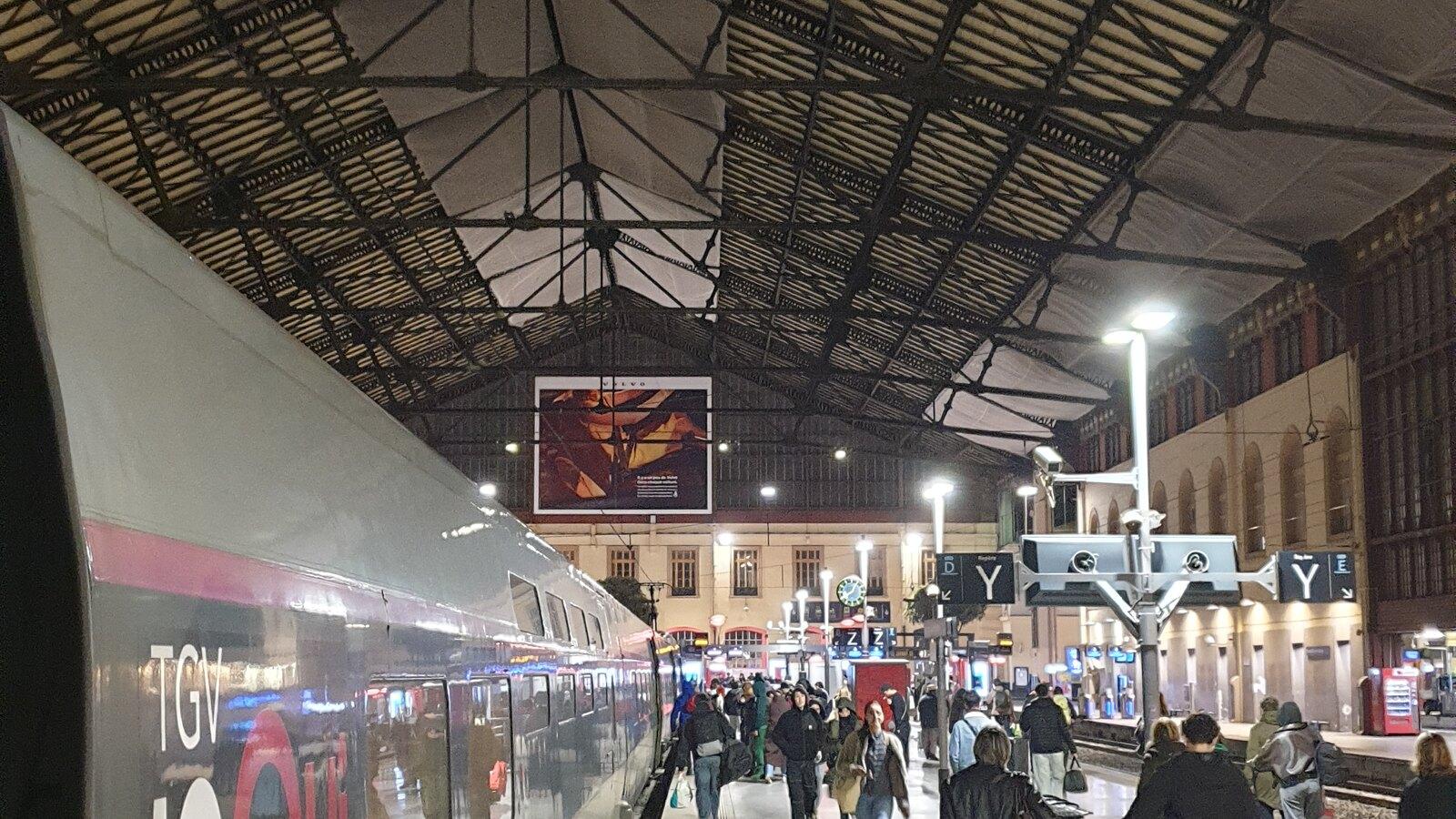
Two nights in Marseille are enough for the old port, Le Panier and Mucem. They are not enough for that same core plus Notre-Dame de la Garde, the Corniche and a meaningful sea or Calanques day. The train time decides which version you are buying.
A morning departure from Barcelona that reaches Marseille in mid-afternoon can support a compact two-night stay. A direct train arriving around 21:30 cannot: its lack of interchange is attractive, but the first night contributes almost nothing beyond checking in. In that case, reserve three nights or accept that the trip is a one-day city introduction.
Choose the Marseille stay before choosing the train
| Stay | What it can honestly hold | Rail condition |
|---|---|---|
| Two nights | Arrival walk at the Vieux-Port; one full Panier–Mucem–Fort Saint-Jean day; departure morning | Reach Marseille by mid-afternoon and return late enough to preserve the final morning |
| Three nights | The compact core plus Notre-Dame and the Corniche, or one weather-dependent sea outing | Best choice for a late direct arrival, early return or any coastal ambition |
| Two nights after a late arrival | One full day and breakfast before departure | Book only if that limited result is deliberate |
Allow five and a quarter to six and a quarter hours each way for realistic planning. For two nights, budget roughly €120–€300 return rail per person, €110–€240 per room per night, €40–€85 per person a day for food, and €11 for a standard Mucem ticket at the current published price. Add local transport and any boat separately. These are planning ranges rather than quoted fares; summer weekends and major events can move rooms sharply.
Reserve the international rail first, then a cancellable room. Book Mucem only after checking its exhibition calendar and closure day. Treat any boat or Calanques plan as the part that may change with wind, fire restrictions or capacity.
A morning Narbonne change can be more useful than the direct train
The live SNCF Connect Barcelona–Marseille search currently illustrates the real choice. On the checked date, a 09:26 departure from Barcelona Sants changes at Narbonne and reaches Marseille Saint-Charles at 14:44, taking 5 hours 18 minutes. Later options arrive at 20:36 or 22:39. Times and even interchange cities vary by date, so these are examples, not a permanent timetable.
Renfe’s published 2026 Spain–France timetable also shows a Madrid–Marseille train calling at Barcelona Sants at 16:31 and Marseille Saint-Charles at 21:30 on its operating dates. That direct ride removes the change but sacrifices the arrival evening. Live sales, not the PDF alone, decide whether it runs on your date.
If a one-change itinerary arrives six or seven hours earlier, do not reject it merely because “direct” sounds safer. Compare four things:
- whether all legs are sold as one journey;
- the interchange station and available minutes;
- the final arrival time at Marseille Saint-Charles;
- the return departure time and fare conditions.
A 20–25 minute Narbonne connection can be workable when it is the retailer’s protected itinerary and you can move your luggage promptly. It is poor material for self-assembled separate tickets. Choose a longer connection if the traveler moves slowly, carries bulky luggage or would struggle with an unexpected platform change.
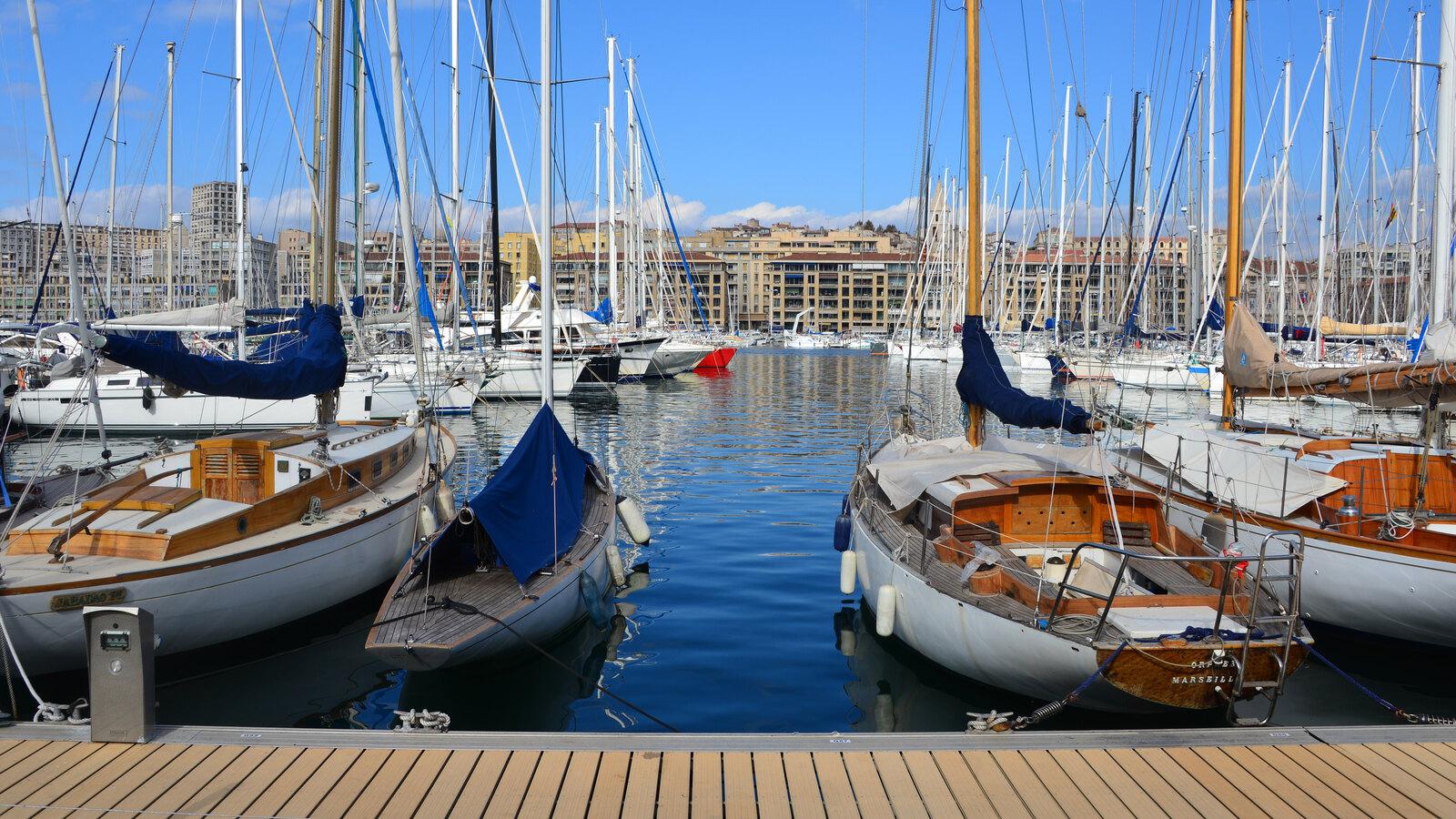
Marseille Saint-Charles is above the city, not beside the port
Saint-Charles is the correct central arrival, but the Vieux-Port does not sit outside its doors. The station is on higher ground. Metro line M1 links Saint-Charles with Vieux-Port; walking downhill takes roughly 20 minutes without stops, while the return climb feels longer with luggage.
For a short stay, choose a hotel between the lower Canebière, Noailles and the Vieux-Port, or close to Saint-Charles if an early train governs the return. A waterfront address far south along the Corniche may look appealing but adds repeated bus or taxi time to the Panier–Mucem day.
Compare Marseille hotels for the exact rail dates, then map each result against either the Vieux-Port–Noailles walking area or the Saint-Charles return you actually chose.
At night, use the main lit routes and a licensed taxi or metro rather than treating the shortest map line as a sightseeing walk with luggage. Confirm reception hours before taking the late direct train. An unstaffed apartment with uncertain entry instructions is a needless risk after a 21:30 arrival.
The two-night version stays around the Vieux-Port
On arrival, descend to the Vieux-Port, cross one quay and learn the harbour’s scale. Do not climb to Notre-Dame immediately or start a museum. Dinner and a short waterfront circuit are enough.
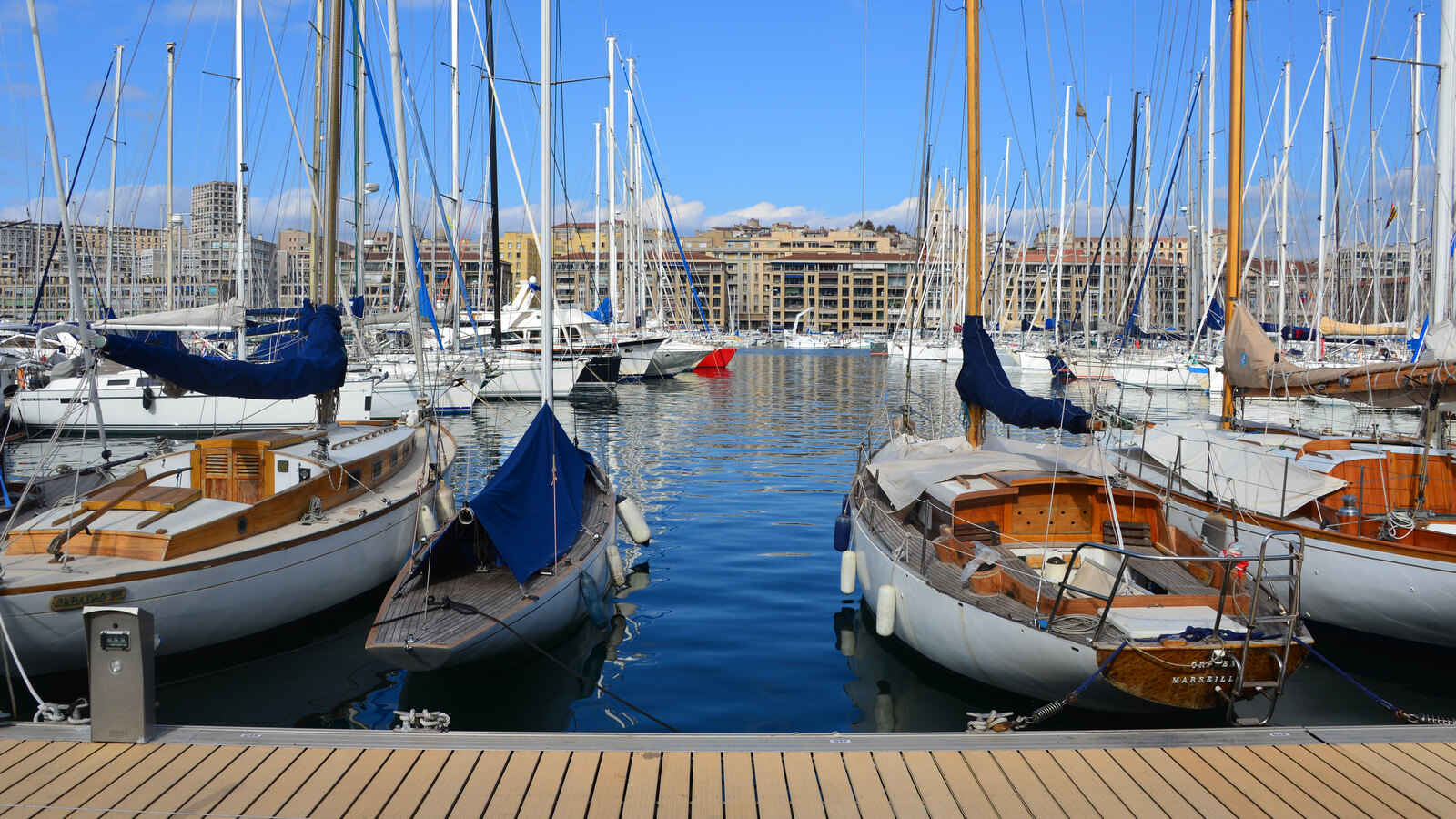
The full day begins on the north side of the port. Walk into Le Panier, then descend toward Saint-Laurent, Fort Saint-Jean and Mucem. Marseille Tourism’s official one-day route uses the same compact logic: Vieux-Port, Panier and the museum complex belong together because they connect on foot.
Give Le Panier enough time to notice steep lanes, small squares and lived-in streets rather than using it as a corridor to the museum. This is also where mobility changes the plan: gradients, steps and uneven surfaces make a direct taxi or bus to a higher point more useful than forcing the complete climb.
Mucem and Fort Saint-Jean need half a day, not a photo stop
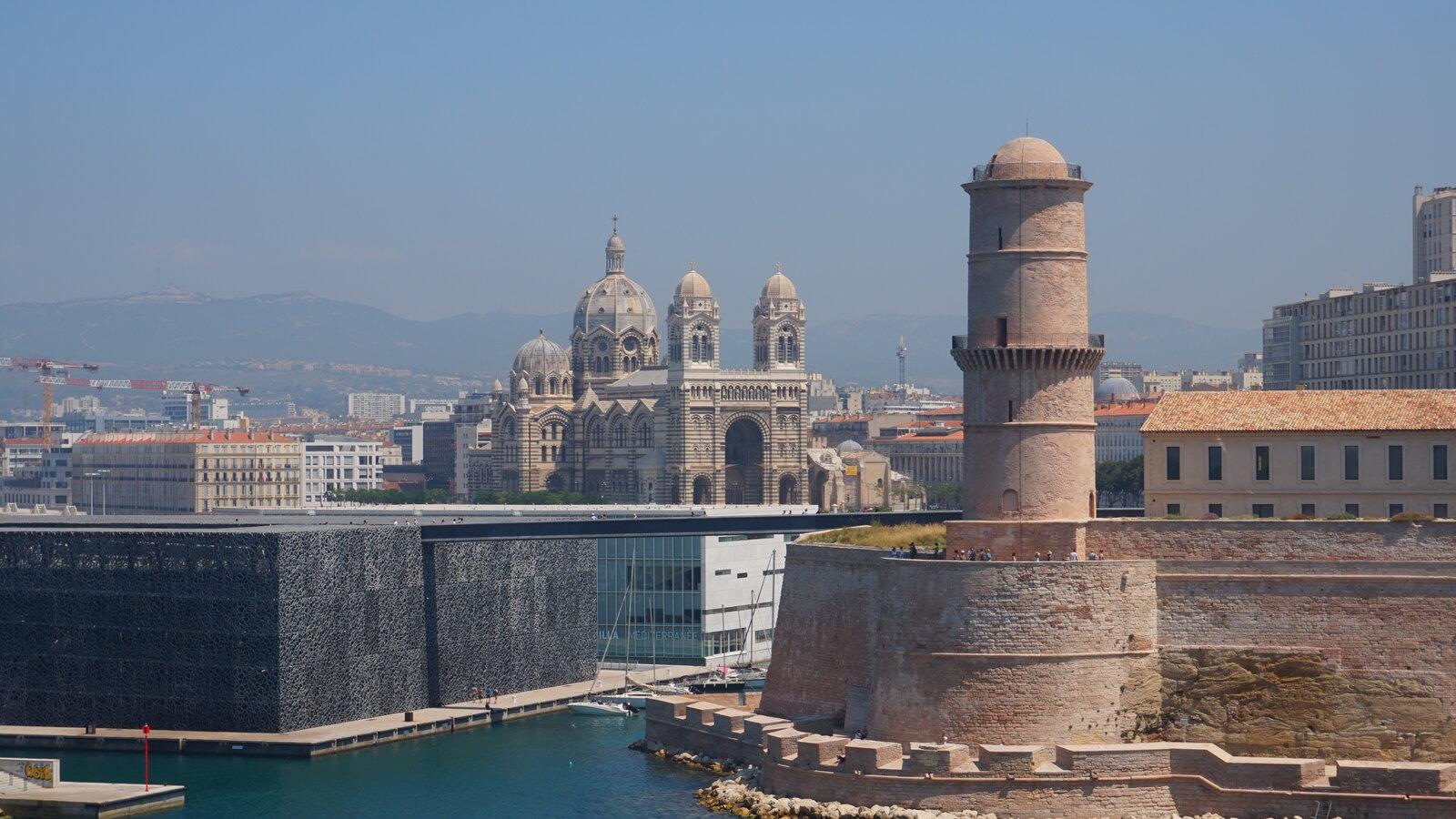
Mucem is the intellectual anchor of the short stay. Its current visitor FAQ lists a standard ticket at €11 and reduced admission at €7.50, with outdoor areas at J4 and Fort Saint-Jean free. The museum is closed on Tuesdays, 1 May and 25 December; opening hours vary through the year, and last admission is 45 minutes before closing.
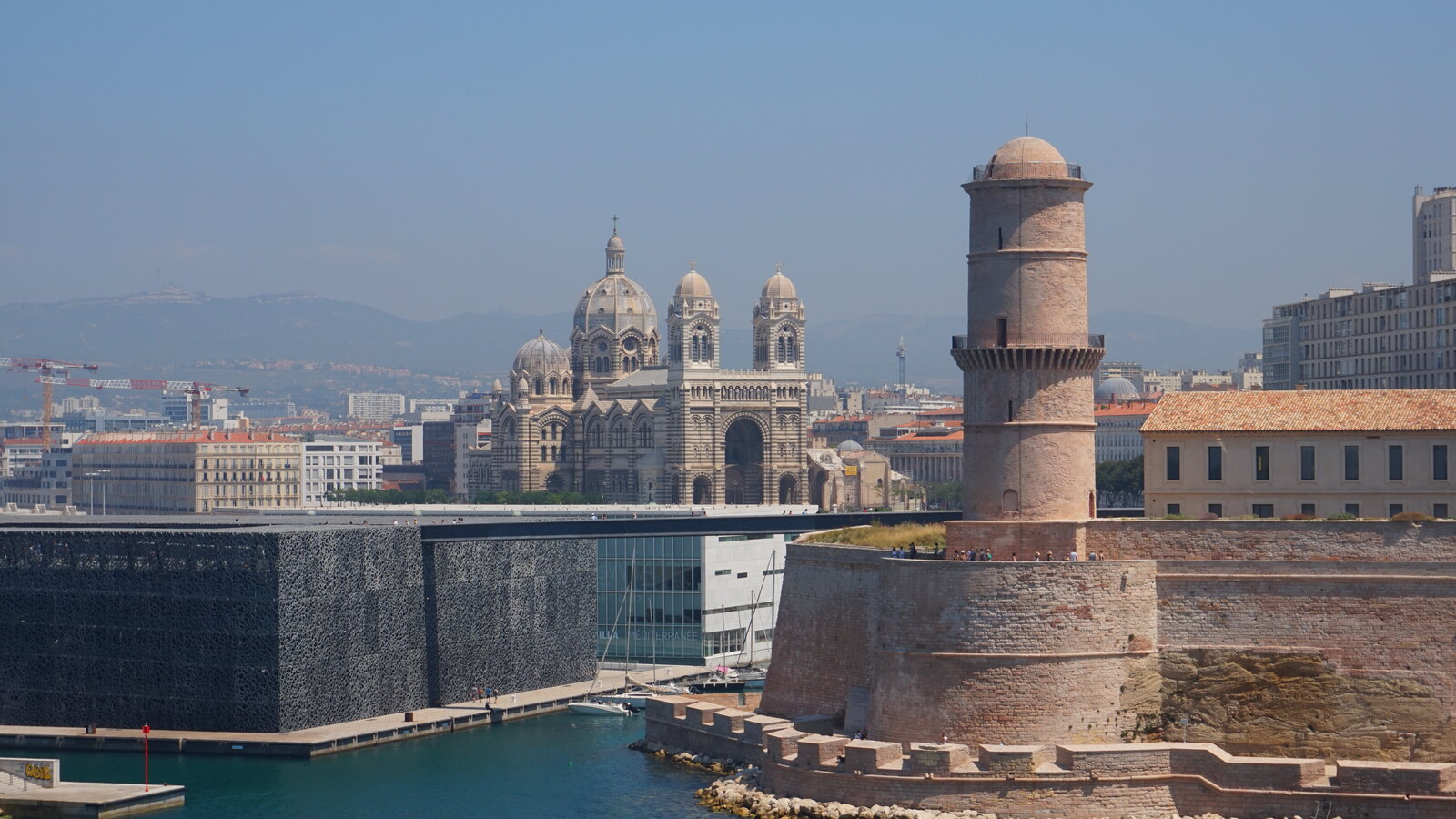
Allow two to three hours for a paid exhibition visit, then time for the fort, harbour edge and footbridges. The 115-metre bridge between the contemporary building and Fort Saint-Jean, and the shorter connection toward Le Panier, turn the museum into part of the city route rather than an isolated box.
The J4 entrance and exhibition spaces are accessible, but some Fort Saint-Jean garden areas remain only partly accessible. A traveler who cannot manage the fort’s changes of level should use the accessible museum route and rejoin the waterfront at ground level.
If the full day is Tuesday, reverse the emphasis: spend longer in Le Panier, visit the free outdoor precincts where open, use the Vieux-Port and move Notre-Dame into the afternoon. Do not book a two-night Marseille stay around a museum that will be shut on its only full day unless that substitution is acceptable.
Notre-Dame and the Corniche are the reason to add night three
Notre-Dame de la Garde is not beside Mucem, despite appearing to face it across the city. Bus 60 is the practical ascent from the port area; the final stop still leaves steps. The official basilica guidance warns that visitors with reduced mobility need motorised access to reach the lift.
It is possible to bolt Notre-Dame onto the Mucem day. The cost is a hurried Panier, shortened exhibitions or a late lunch. A third night lets the hill lead into Abbaye Saint-Victor, Vallon des Auffes and a section of La Corniche without racing back to the station. That sequence reveals Marseille’s topography: harbour, defensive edge, steep residential city and open sea.
Choose the hill-and-Corniche day when wind makes a boat unpleasant. It is a complete urban alternative, not consolation sightseeing.
Frioul or the Calanques require a separate weather window
A Frioul trip starts at the Vieux-Port maritime station and consumes much of a day once boarding, the crossing and island walking are included. RTM’s Frioul service information distinguishes these boats from the seasonal city sea shuttles and publishes operating periods, boarding points and capacity warnings. A normal urban day pass does not automatically make every maritime service free.
The Calanques are an even larger commitment. They are not a quick extension of the Corniche. Reaching a trailhead, carrying sufficient water, walking exposed ground and returning to Marseille require a dedicated plan. From 1 June to 30 September, access can be restricted or prohibited because of fire risk; check the Calanques National Park access page on the day rather than relying on a saved itinerary.
If the sea is cancelled or the massif closes, keep the third night and use it in the city. Notre-Dame, the Corniche, a longer Mucem visit or the inland markets all survive that failure better than forcing a substitute boat operator at the quay.
The return train is the final test
For an afternoon return, leave the last morning unscheduled: breakfast near the port, collect luggage and reach Saint-Charles at least 30–40 minutes before departure. For an early return, sleep near the station and accept that the third morning has disappeared.
Two nights are enough when the chosen train creates an arrival evening, one undivided core day and a usable departure morning. Three nights are the correct purchase when the direct train arrives late, the return leaves early, or the wish list contains both the historic harbour and Marseille’s exposed coast. The extra night is not padding; it is what keeps a large, steep port city from being reduced to a transfer between trains.
Related guides
- Barcelona to Avignon by Train: A Two-Night Extension
Build a worthwhile two-night Avignon rail extension with protected connections, the right station and one full day inside the walls.
- Lleida to Loarre and Huesca: A Two-Night Road Extension
Drive from Lleida to Huesca and Loarre with the castle opening window, rural approach, parking and a realistic two-night base built in.
- Tortosa to Valderrobres: A Two-Night Matarraña Road Trip
Cross from the Terres de l’Ebre into Aragón by road, then build two nights in Valderrobres around one castle visit and one chosen side trip.
Are you in the know?
Receive new articles, local updates, and occasional offers from selected partners. We never share your email address. Unsubscribe at any time.
By subscribing you agree to our privacy policy.