Beyond
Barcelona to Avignon by Train: A Two-Night Extension
Build a worthwhile two-night Avignon rail extension with protected connections, the right station and one full day inside the walls.
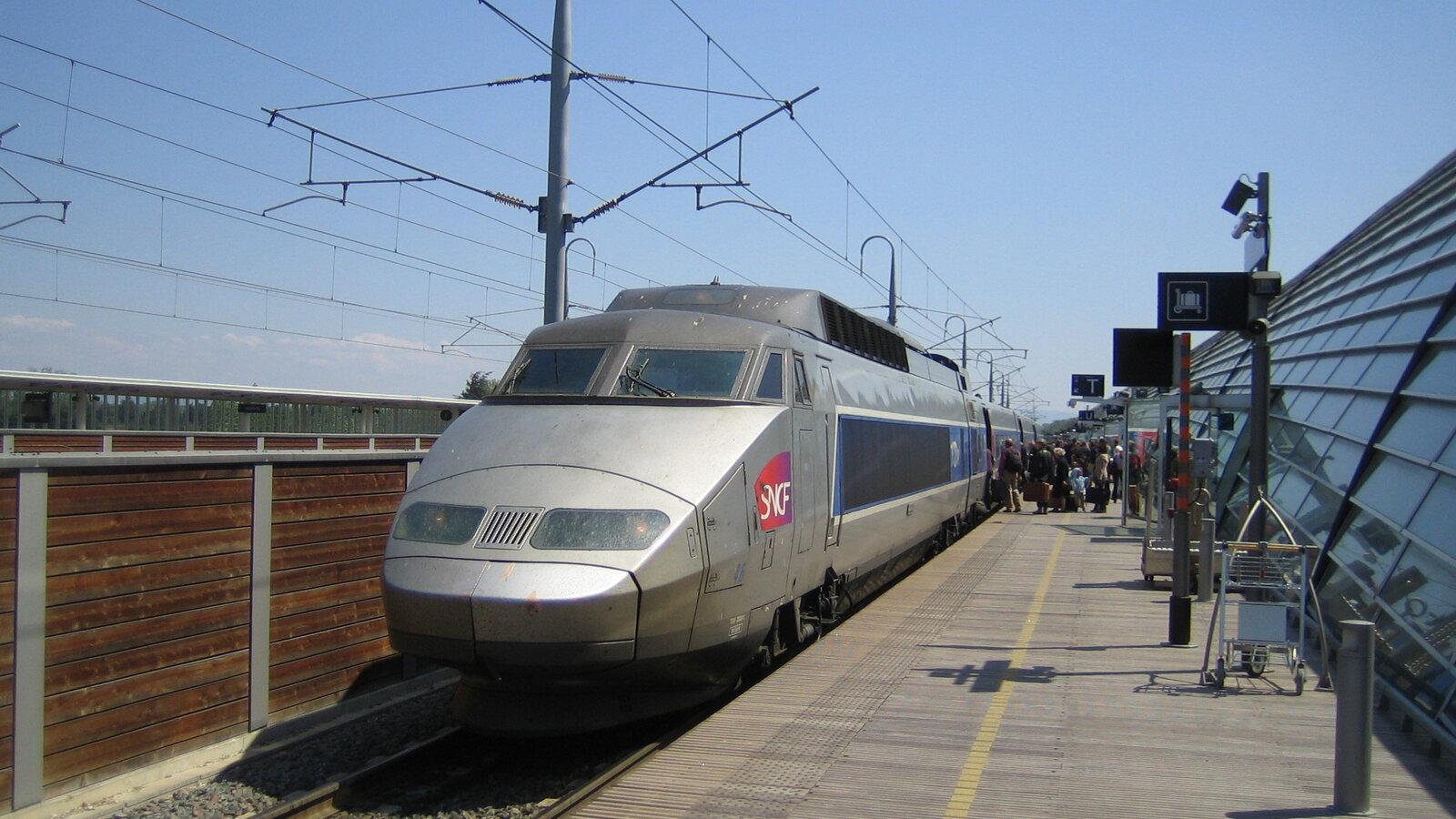
Two nights in Avignon work only when the trains create one intact day inside the walls. An evening arrival, a full middle day and a late-morning or afternoon return are a genuine extension. A late arrival followed by an early departure is an expensive way to sleep in France.
Search the complete Barcelona–Avignon journey before booking the hotel. Current results can involve Narbonne, Montpellier or Nîmes, can finish at either Avignon TGV or Avignon Centre, and vary by date. Choose the itinerary that protects the visit, not the one that wins by twelve minutes through a brittle interchange.
The two-night shape that earns the border crossing
| Day | Rail and walking plan | Decision that protects it |
|---|---|---|
| Day 1 | Barcelona Sants to Avignon; check in inside or just outside the remparts; short orientation walk | Arrive with time to reach the hotel without depending on the final local connection |
| Day 2 | Timed Palais des Papes visit, Rocher des Doms, Pont Saint-Bénézet, Rue des Teinturiers | Keep this as the only full monument day; do not spend it on a Provence excursion |
| Day 3 | Market or quiet lanes, collect luggage, return to Barcelona | Leave a real margin at every French interchange and at Barcelona Sants |
Treat four and three-quarter to five and a half hours as a useful planning range, not a timetable promise. The live SNCF Connect Barcelona–Avignon search currently shows journeys from about 4 hours 47 minutes, but daily frequency, stations and changes move with the date and works.
For an indicative budget per person, allow €120–€300 return rail, €110–€250 per room per night outside the festival peak, €40–€80 a day for meals, and €19.50 for the current adult combined palace-and-bridge ticket. Those are planning envelopes, not quoted fares. July’s Festival d’Avignon can push accommodation well beyond them and changes the character of the city entirely.
Buy Barcelona–Avignon as one journey when the seller allows it
A through search can still display several trains, but it gives the retailer the complete intended journey. That is preferable to independently assembling Barcelona–Narbonne, Narbonne–Nîmes and Nîmes–Avignon tickets to save a small amount. Separate contracts can leave the traveler to solve a missed connection that the through itinerary would have handled as one journey.
Read the result line by line before payment:
- exact Barcelona departure station: normally Barcelona Sants;
- international train number and operator;
- interchange station and minutes available;
- whether the next arrival is Avignon TGV or Avignon Centre;
- whether all legs appear on the same confirmation;
- exchange conditions for the chosen fare.
The border train calls at Girona and Figueres Vilafant on many schedules before Perpignan and Narbonne, but do not infer your travel date from a generic route map. Renfe’s published 2026 Spain–France timetable shows how the Barcelona–Lyon service can include Avignon TGV; the live sales result decides whether that train operates and is bookable on your date.
Avoid a connection that asks you to change platforms, operators or stations with only a nominal few minutes. A 15-minute interchange at Nîmes Centre may be offered by the planner, but it gives little recovery room for a traveler with luggage. Prefer the longer valid connection unless the whole journey is protected and you can move quickly. Never create a Nîmes Centre–Nîmes Pont du Gard transfer yourself without accounting for the distance between them.
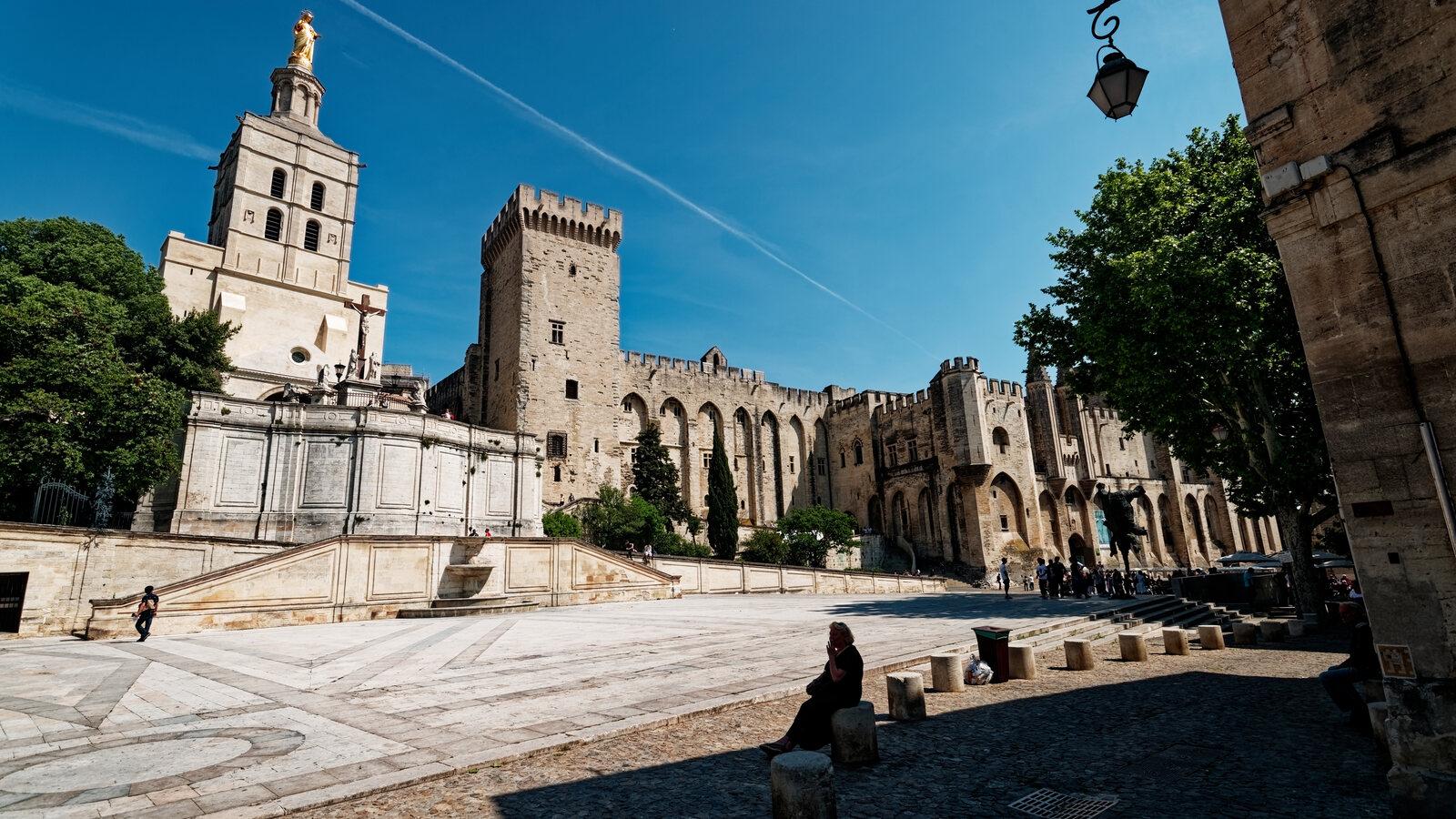
Avignon TGV and Avignon Centre are not interchangeable labels
Avignon Centre stands immediately outside the southern city wall. From there, Porte de la République and the main intra-muros axis are a short walk. It is the useful arrival for a hotel within the remparts.
Avignon TGV is the high-speed station south-west of the historic centre. ZOU! local trains connect it with Centre; the live Avignon TGV departure board shows regular departures labelled Avignon Centre. Buy a journey that includes this leg or be prepared to obtain the local ticket and locate its platform.
The transfer is short in motion but still needs a margin for leaving the TGV, reading screens and reaching the local platform. If the international train is late and the last practical shuttle has gone, use the signed taxi rank rather than improvising a walk from the TGV station. Send the hotel the delayed arrival time before leaving the platform.
The official Avignon Centre station page provides live departures, equipment status and station services. Check it on departure morning. The city-centre station is convenient precisely because the final walk is simple; protect that advantage by staying somewhere you can actually reach with luggage.
Sleep inside the remparts, but not on the loudest route
For two nights, a central bed is worth more than a pool or rural view. Choose the southern half of the walled city if fast access to Avignon Centre matters, or the central/northern lanes if the Palais and river edge matter more. In either case, ask for the exact walking route and late check-in procedure.
Compare Avignon rooms for the same two nights, then verify whether the rate is inside the remparts or near Avignon Centre, includes late check-in and provides the lift or step-free route you need.
Do not choose a distant Provence property on the assumption that Avignon is a transport hub for a two-night stay. A taxi or bus at each end consumes the very hours that justify the trip. Nor should a traveler with limited mobility assume a picturesque lane is step-free: old buildings may have stairs, cobbles and no lift.
During the July festival, noise is not limited to one square. Ask about street-facing rooms, performance venues and reception hours. If sleep is the priority, stay just outside the wall near Avignon Centre and walk in by day.
Day 2 starts with the Palais des Papes, not a side trip
Reserve the first or an early timed entry to the Palais des Papes. From 1 August through 31 December 2026, the official palace page lists standard adult admission at €16. The palace and Pont Saint-Bénézet combination is currently €19.50. Prices and exhibitions change, so use the booking page attached to your date.
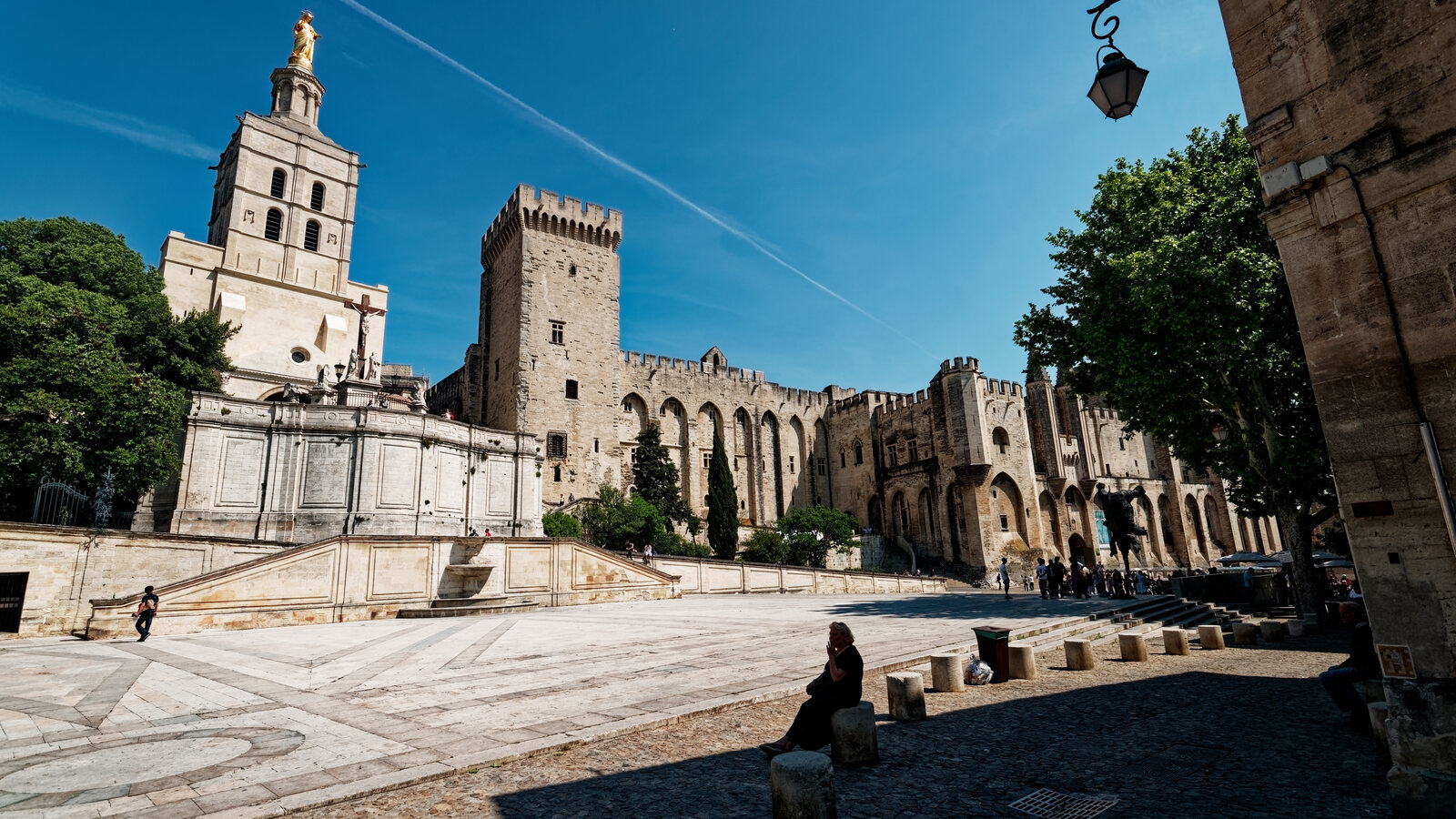
Give the palace two to three hours. Its value lies in moving through a fortified fourteenth-century papal residence, not in collecting a façade photograph. It is neither air-conditioned nor heated, and its many stairs make it unsuitable for some visitors with reduced mobility. The official visitor information recommends advance booking and states that the palace itself is not wheelchair accessible.
After the interior, use Rocher des Doms as the recovery interval rather than immediately entering another building. Then walk to the Pont Saint-Bénézet. The bridge page lists €6 adult admission for the same late-2026 period and notes lift access, though visitors should confirm that the lift is operating.
Heat changes the order. On a hot day, take the palace at opening, pause through the most exposed hours, and visit the bridge later. In rain or strong mistral, keep the palace and replace a long river-edge pause with a café or small museum. The bridge is not a test that validates the trip.
Rue des Teinturiers gives the second half a different scale
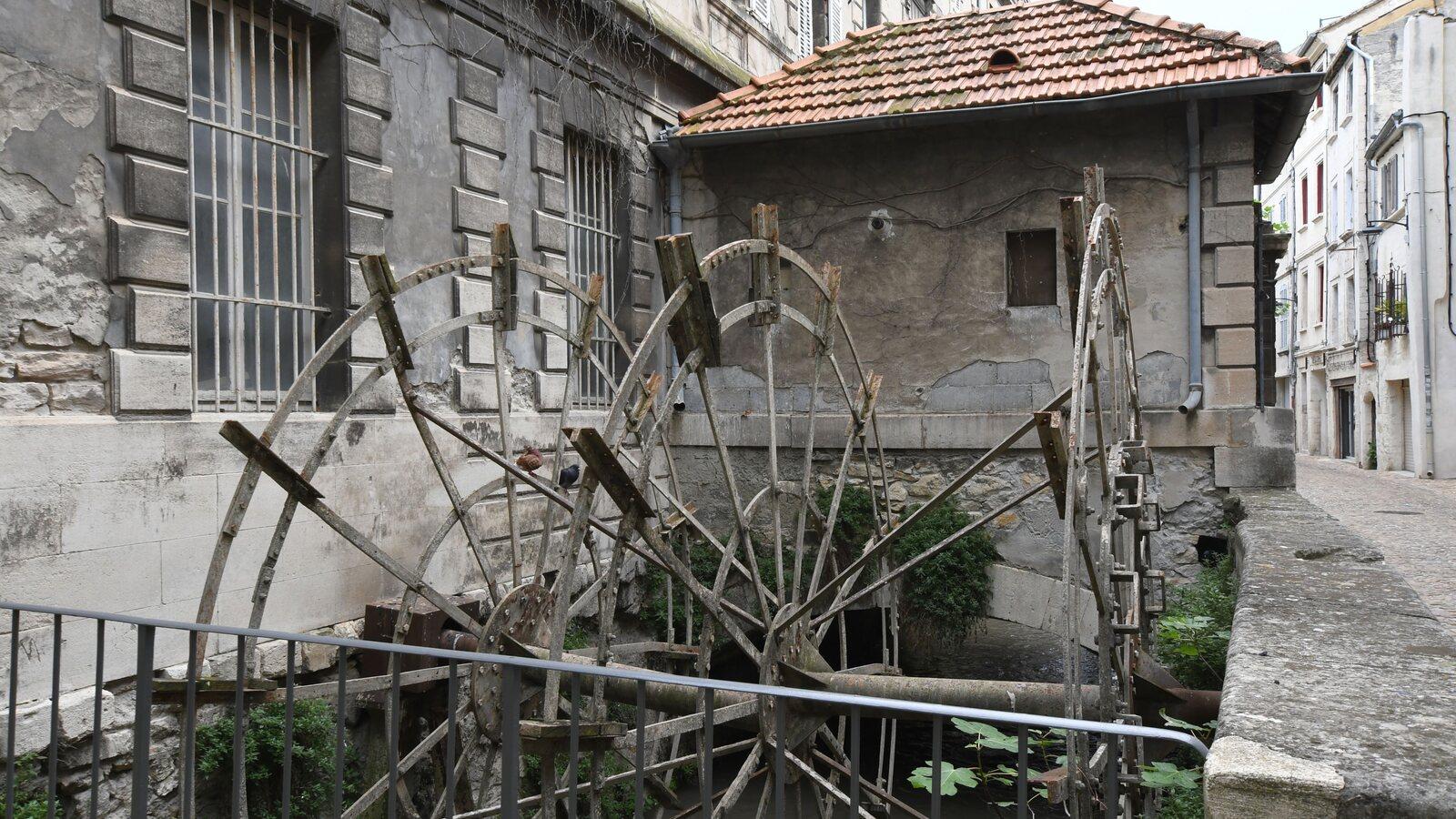
Walk south-east through the intra-muros streets toward Rue des Teinturiers. Its narrow canal, water wheels, footbridges and former industrial buildings shift the day away from papal monumentality. This is not an additional ticketed attraction; it is the connective fabric that makes the overnight feel like a city stay.
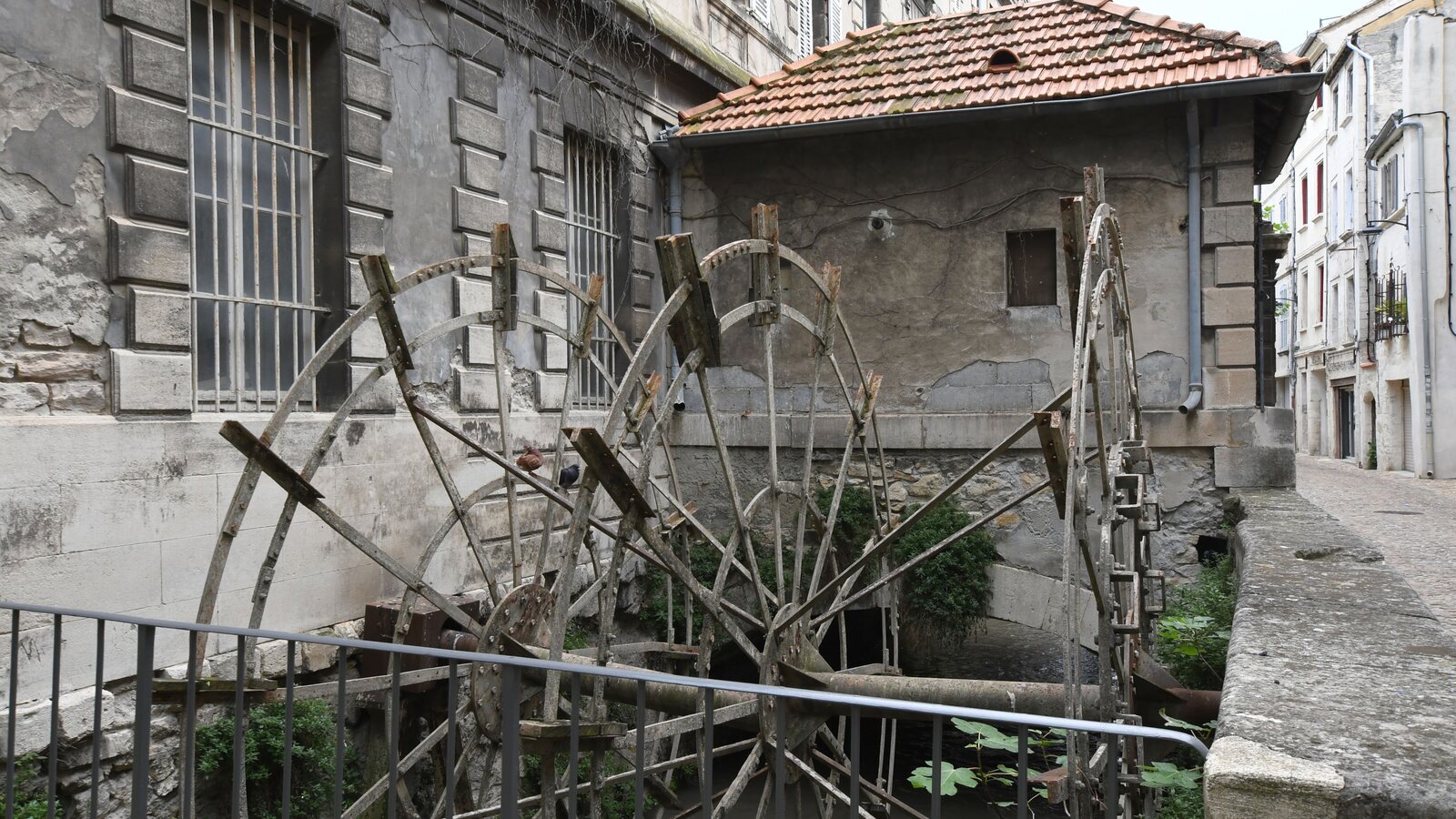
The official 48-hour Avignon plan also pairs the palace with the bridge and Rue des Teinturiers. Follow that compact logic, but stop adding. Villeneuve-lès-Avignon, Arles and the Luberon all deserve their own time; none improves a single full day already anchored by the palace.
Eat dinner within walking distance of the hotel. A two-night rail extension should end its main day on foot, not with a last bus calculation.
Day 3 belongs to the return connection
Use the departure morning for breakfast, Les Halles if open on the chosen day, or one unhurried lane between the hotel and Avignon Centre. Do not book a timed attraction that ends close to the train. Collect luggage at least 45 minutes before you need to leave the hotel area.
If the return begins at Avignon TGV, treat the Centre–TGV shuttle as a train connection, not a platform walk. If it begins at Avignon Centre, verify that the first leg and all later changes still match the ticket. Save the itinerary offline and keep both station names visible.
When the only affordable return leaves too early to preserve the morning, or the outbound reaches Avignon after the practical hotel check-in window, add a third night or choose another date. The correct fallback is more time, not faster sightseeing. Avignon earns its place beyond Catalonia when the railway delivers a full walled-city day between two controlled journeys.
Related guides
- Barcelona to Marseille by Train: Are Two Nights Enough?
Choose two or three nights in Marseille by testing the real rail windows against the port, Panier, Mucem and coast you want to see.
- Lleida to Loarre and Huesca: A Two-Night Road Extension
Drive from Lleida to Huesca and Loarre with the castle opening window, rural approach, parking and a realistic two-night base built in.
- Tortosa to Valderrobres: A Two-Night Matarraña Road Trip
Cross from the Terres de l’Ebre into Aragón by road, then build two nights in Valderrobres around one castle visit and one chosen side trip.
Are you in the know?
Receive new articles, local updates, and occasional offers from selected partners. We never share your email address. Unsubscribe at any time.
By subscribing you agree to our privacy policy.